
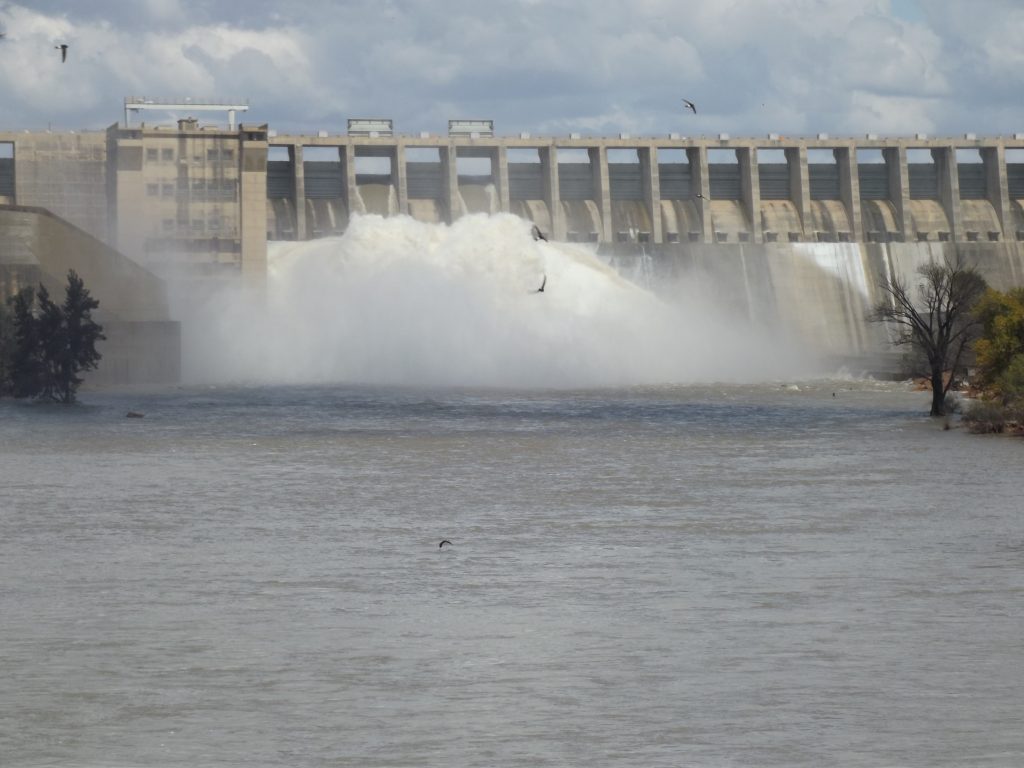
Water scarcity and water mismanagement have become among the most visible manifestations of South Africa’s wider socioeconomic and governance crisis. Townships and suburbs sometimes go for days, and in some instances weeks, without reliable water. For many rural communities, access to clean and potable water remains a luxury. Water is therefore not simply another household commodity or convenience. It is a basic necessity, a public good and a condition of human dignity.
It is against this background that events associated with Spring Day on 1 September should make us pause.
In some parts of the country, children, joined by youths and adults, participated in the practice of pouring buckets of water over unsuspecting people, including adults. What may have begun as harmless fun became disturbing when some of those subjected to it expressed discomfort or resisted. In some instances, resistance was reportedly met with vulgar language, intimidation and violent conduct.
The subsequent death of a 21-year-old man following an altercation with a 53-year-old man has generated intense and divergent reactions. There are important questions to be asked about individual responsibility, violence, proportionality, conflict and the circumstances surrounding the fatal confrontation. These questions should be addressed seriously and without romanticising or justifying violence.
But there is a deeper question that risks being lost amid the outrage, counter-outrage and polarisation on social media:
What does this episode tell us about the state of our sociopolitical consciousness and moral life as a society?
The significance of the incident extends beyond the individuals directly involved. It provides an uncomfortable window into a broader crisis of social consciousness, civic responsibility, moral judgement and respect for the dignity of others.
Socio-political consciousness is more than knowing the names of political parties, politicians or government institutions. It entails an understanding of the social conditions in which we live, the structures that shape those conditions, our location within society and our responsibilities towards others. It enables people to connect the seemingly ordinary and personal with the wider social reality.
A young person with a critical understanding of South Africa’s water crisis might reasonably ask:
What does water mean in a society in which many people struggle to obtain it? Such consciousness would not necessarily prohibit celebration, play or cultural expression. It would, however, encourage sensitivity, restraint and consideration for the realities experienced by others.
Similarly, moral intelligence requires an understanding that another person’s body, dignity, personal space and autonomy are not available for our amusement. Something does not become acceptable simply because the person doing it considers it a joke. Nor does a collective activity automatically become legitimate because many people are participating in it.
This is where the Spring Day episode becomes bigger than Spring Day.
How do we produce humane and conscious human beings?
Children and young people do not emerge from nowhere. They are products of families, schools, communities, churches, mosques and other faith-based institutions, civil society organisations, sports clubs, cultural organisations, youth formations and the broader social environment.
They are also shaped increasingly by popular culture and digital environments.
The individuals involved in such incidents belong, or have belonged, to one or more of these institutions.
What, then, are these institutions teaching?
What conception of citizenship are they cultivating?
What are they teaching young people about dignity, rights, responsibility, social inequality, public resources, conflict, boundaries and the consequences of their actions?
And, perhaps most importantly:
Are we still deliberately cultivating conscious human beings, or have we become increasingly preoccupied with producing successful individuals, consumers, competitors, examination candidates and social-media performers? The problem therefore cannot simply be individualised.
It is tempting to identify the young people involved, condemn their behaviour and move on. It is tempting to blame parents, schools or “today’s youth”. But such explanations allow the wider society to escape scrutiny.
We should instead look into the mirror.
If young people grow up amidst extreme inequality, water insecurity, unemployment, violence, social fragmentation, public incivility and the normalisation of disrespect, and some emerge without a sufficiently developed sense of social responsibility, then we must also interrogate the social and educational environments in which they have been formed.
We are not merely observers of this crisis. We are part of the conditions that produce it.
The unfinished work of social education.
This is precisely why community education and political education remain indispensable.
Community education, properly understood, is not simply education delivered in a community. It is education that begins with people’s lived experiences, problems, aspirations and contradictions, and creates spaces in which these can be collectively examined, interpreted and acted upon.
Political education should likewise not be reduced to party politics, electoral participation or knowledge of government structures.
It encompasses civic education and political literacy, political conscientisation and political orientation.
It enables people to connect everyday experience with wider socioeconomic and political realities. It asks people not merely to experience the world, but to read the world.
This tradition has deep roots in South African popular education. Freirean approaches have historically informed Black Consciousness, trade union education, community struggles and People’s Education, while contemporary scholarship continues to emphasise participatory, experiential and consciousness-raising approaches to community education.
The point is not to tell people what to think.It is to create educational processes through which people learn to question, investigate, interpret, deliberate, judge and act.
A water crisis, for instance, should not remain merely an experience of turning on a dry tap.
It can become a question about:
water → inequality → infrastructure → governance → accountability → citizenship → collective responsibility.
Likewise, an incident involving the violation of another person’s dignity should not simply become an occasion for punishment or social-media outrage.
It can become an opportunity to explore:
dignity → rights → boundaries → responsibility → conflict → respect → coexistence.
This is the educational movement from experience to consciousness.
And consciousness, if it is to be meaningful, must ultimately be connected to responsibility and action.
The place of engaged religio-spiritual education
There is an equally important place for engaged religio-spiritual education.
Such education should not exist in an abstract moral universe, detached from the material and social realities in which people live.
It cannot simply speak about goodness, compassion, justice, human dignity and responsibility in the abstract while remaining silent about the lived realities of poverty, inequality, violence, corruption, social exclusion, water insecurity, unemployment and the degradation of human relationships.
Religio-spiritual education must be located in lived experience and social reality.
It should enable people to ask:
What does justice mean here?
What does human dignity require here?
What does compassion demand of us here?
What does responsibility towards another human being mean here?
What does our faith or spiritual tradition require of us in the face of social suffering and injustice?
In this sense, religio-spiritual education can contribute to moral formation not by preaching at people from above, but by helping them interpret their everyday experiences through ethical, spiritual and social questions.
It should connect faith and life, spirituality and society, morality and action.
From experience to consciousness
What is required, therefore, is not simply more information.
It is a different kind of educational process.
One that begins with lived experience.
One that creates space for reflection.
One that develops critical understanding.
One that nurtures sociopolitical consciousness.
One that cultivates moral intelligence and ethical responsibility.
And one that enables people to translate understanding into responsible individual and collective action.
The movement might therefore be expressed simply as:
Experience → Reflection → Understanding → Conscientisation → Orientation → Responsibility → Action.
This is not education as the passive transfer of information. It is education as a process of human formation and social transformation.
The task is to develop people who can see beyond the immediate moment; who can connect their personal conduct to the lives of others; who can recognise the social consequences of apparently trivial actions; who understand their rights together with their responsibilities; and who possess the capacity to act with both critical intelligence and humanity.
We are the mirror.
The Spring Day episode should therefore be more than another cycle of outrage on social media.
It should compel us to ask:
What kind of society are we becoming?
What kind of human beings are our institutions producing?
What forms of education are we providing for citizenship, responsibility and human dignity?
And:
What must we do differently if we want to produce not merely educated people, but conscious, humane, responsible and morally discerning citizens?
Perhaps the most uncomfortable conclusion is also the most necessary.
Instead of asking only:
“What is wrong with these young people?”
We should ask:
“What is wrong with us?”
Because children and young people are not simply individuals floating outside society. They are formed within families, schools, communities, institutions, cultures and social conditions.
They are, in important respects, products of us and of the society we have created and handed to them.
That does not absolve individuals of responsibility for their conduct.
It does, however, impose a responsibility on all of us to examine the conditions, institutions and educational practices through which human beings are formed.
The challenge before us is therefore simultaneously educational, political, ethical, cultural and spiritual.
We need education that does not merely teach people about the world, but helps them learn to read the world.
Education that does not merely produce knowledge but develops consciousness.
Education that does not merely produce individuals who know their rights, but citizens who understand their responsibilities.
Education that does not merely reproduce society as it is, but equips people to imagine and build the society as it ought to be.
That is the unfinished work of community education, political education and engaged religio-spiritual education.
And that is why the question raised by Spring Day is ultimately much larger than what happened on 1 September.
It is a question about who we are becoming—and what kind of human beings we are preparing the next generation to become.
- Mphutlane wa Bofelo is a Scholar and Researcher in Governance and Political Transformation, with a focus on Political Development, Public Leadership, Popular Politics, and Worker Education
