
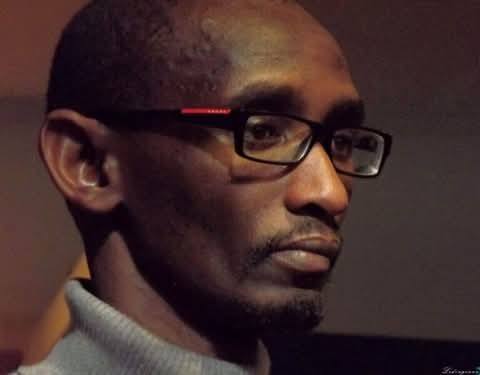
As an agronomist, Amílcar Cabral drew upon his extensive interaction with diverse communities while conducting agricultural surveys of the land and its resources throughout Guinea and Cape Verde. This work provided more than technical knowledge of soil, crops, and production systems. It offered him an intimate understanding of the lives, cultures, values, and aspirations of the people.
These encounters became the basis for profound reflection on the national liberation struggle and on the importance of recovering the positive elements of people’s history and culture as indispensable resources for emancipation. For Cabral, culture was not merely a repository of traditions but a living source of resistance and renewal, capable of sustaining oppressed peoples in their struggle against colonial domination.
Similarly, as a psychiatrist, Frantz Fanon drew upon his observations and experiences working with mental health patients in the colonial context. His engagement with patients enabled him not only to illuminate the psychological trauma, social alienation, and profound forms of dehumanisation produced by colonialism, but also to develop innovative approaches to mental health care.
Fanon advanced a model of community-based psychiatry grounded in the conviction that mental health patients would enjoy better prospects for recovery when integrated into family and community life rather than being confined to isolated institutional settings. In this respect, his work contributed significantly to the development of institutional psychotherapy and broader efforts to humanise psychiatric care. Yet Fanon’s contribution extended beyond the clinic. He demonstrated how the psychological suffering experienced by individuals was inseparable from broader structures of political domination, economic exploitation, and cultural oppression.
Both Cabral and Fanon refused to confine themselves to philosophical inquiry, theoretical analysis, or literary exposition. While producing some of the most influential intellectual works of the twentieth century, they also became active participants in armed struggles against colonial domination. They articulated their ethical and political commitments not only through words on paper but through direct engagement in revolutionary praxis. Their lives embodied a unity of theory and practice, thought and action, intellectual labour and political struggle.
These are only two prominent examples. The history of anti-colonial and liberation movements is replete with scientists, scholars, artists, philosophers, educators, and cultural workers who transcended the boundaries of a fenced and gated pedagogy. Rather than treating knowledge as something produced exclusively within specialised institutions, they practised a lived, borderless pedagogy that connected sites of learning, social experience, and political action. In such a pedagogy, the home, the community, the school, the workplace, the university, the psychiatric ward, the farm field, the underground movement, and the battlefield all become interconnected spaces for the production and application of knowledge. Learning emerges through engagement with lived realities rather than through detached observation alone.
The pressing question confronting us today is how scientists, artists, philosophers, educators, and other knowledge producers in the neo-colonial and postcolonial condition can continue this tradition. How can they resist becoming confined within a gated pedagogy that treats academia as a self-contained province divorced from the broader struggles of society? How can they challenge approaches that obscure the ideological, political, and economic dimensions of fields such as medicine, education, and science? How can they resist dominant frameworks that individualise and psychologise social suffering, presenting structural problems as personal failures while ignoring the historical and systemic forces that generate inequality, exclusion, and alienation?
Perhaps the challenge is not simply to take knowledge beyond the university, but to recognise that knowledge is already being produced beyond it. The task is to rebuild organic relationships between intellectual work and popular struggles, between professional expertise and community experience, and between scholarly inquiry and projects of social transformation. In this sense, the legacy of Cabral, Fanon, and countless other anti-colonial intellectuals continues to pose a profound challenge to contemporary scholars and professionals: whether they will remain custodians of specialised knowledge within institutional enclosures, or become active participants in broader struggles for human liberation.
This September, as we commemorate the 50th anniversary of the martyrdom of Bantu Stephen Biko, it is not enough merely to sing songs, recite poems, invoke slogans, and ritualistically declare that “Biko Lives.” To honour Biko authentically requires more than remembrance. It requires a critical interrogation of our social practice and a commitment to transformative action. Each of us must ask how, within our own field of experience, expertise, and engagement, we contribute to advancing the quest for a humane, just, and egalitarian society.
We must ask how, in our daily lives, we give concrete expression to the injunction to free the mind in order to free the land. How do we translate solidarity into practice? How do we contribute to the ongoing work of writing and rewriting social reality, deconstructing oppressive narratives and reconstructing emancipatory ones? How do we ensure that our knowledge, skills, and professions serve the cause of human dignity rather than the reproduction of inequality, exploitation, and domination?
Biko’s life reminds us that consciousness is not an end in itself but the beginning of a process of personal and collective transformation. The measure of our commitment does not lie in what we proclaim but in what we do, in how we live, work, organise, create, teach, heal, and struggle. It is therefore possible to repeat the words “Biko Lives” while simultaneously betraying the substance of what Biko stood for.
Biko lives, but we are dead. Dead to the suffering of others, dead to solidarity, dead to the courage required to confront injustice and speak truth to power. And in our deadness, we kill Biko anew every day, not as a man, for the apartheid state could not destroy him, but as a living social and political possibility. Every act of indifference, every retreat into cynicism, every surrender to powerlessness, and every refusal to translate consciousness into action becomes another burial of the Biko we claim to celebrate. If Biko is to live, he must live through us: through a restless commitment to justice, through the recovery of our humanity, and through the unfinished struggle to build a society founded on freedom, equality, and human dignity.
- Mphutlane wa Bofelo is a scholar in Governance and Political Transformation, a popular educator who is currently a post- doctoral fellow at the University of Johannesburg. He writes in his personal capacity.
